Power of Compounding Explained with Examples
The power of compounding shows how money grows faster when interest is earned not only on the original investment but also on the accumulated interest. Over time, this effect becomes exponential, making long-term investing one of the most effective ways to build wealth. Even small, regular investments can grow into significant amounts if given enough time and a reasonable rate of return. Examples like turning $10,000 into over $67,000 in 20 years or doubling money every 9 years at 8% highlight why compounding is so powerful. The key to benefiting from compounding is starting early, staying consistent, and allowing time to do the heavy lifting.
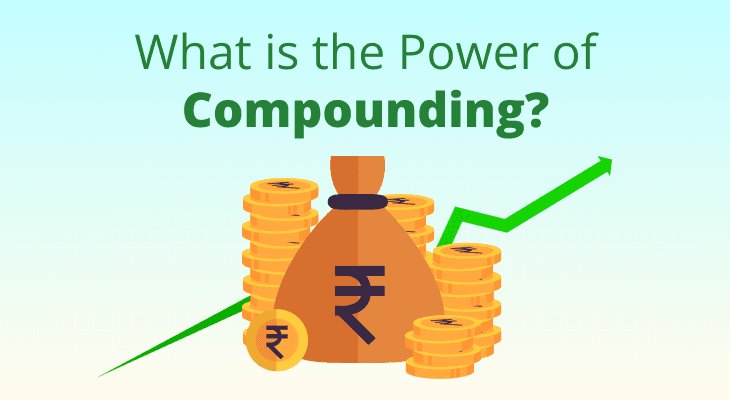
The power of compounding is often called the eighth wonder of the world. Whether you are a student, investor, salaried professional, or business owner, understanding compounding can completely change how you view money, savings, and long-term wealth creation. In this article, we’ll break down the power of compounding explained with examples, real-life calculations, famous quotes, and practical rules that make this concept simple and powerful.
What Is the Power of Compounding?
What is the power of compounding?
Compounding is the process where your money earns interest, and then that interest itself earns interest over time. Unlike simple interest, where returns are calculated only on the principal amount, compounding allows your wealth to grow exponentially.
In simple words:
Money grows faster when interest earns interest.
How to Explain the Power of Compounding?
To explain compounding easily, think of a snowball rolling downhill. At first, it’s small and grows slowly. But as it rolls further, it picks up more snow and grows much faster. Money behaves the same way with time and consistent returns.
The key elements are:
-
Time
-
Rate of return
-
Consistency
The longer your money stays invested, the stronger the compounding effect becomes.
How Much Will $10,000 Be Worth in 20 Years?
Let’s assume a 10% annual return, compounded yearly.
Formula:
FV = P × (1 + r)ⁿ
FV = 10,000 × (1.10)²⁰
FV ≈ $67,275
Your $10,000 becomes over 6.7 times in 20 years without adding extra money. This clearly shows why compounding is so powerful.
How Much Is $1000 Worth at the End of 2 Years if the Interest Rate of 6% Is Compound?
FV = 1,000 × (1.06)²
FV ≈ $1,123.60
Even in a short period, compounding adds incremental value—small at first, massive over time.
How Much Is $10,000 Worth in 10 Years at 5% Annual Interest?
FV = 10,000 × (1.05)¹⁰
FV ≈ $16,289
This shows that even modest returns can create meaningful growth if time is allowed to work.
How Much Is $10,000 at 10% Interest for 10 Years?
FV = 10,000 × (1.10)¹⁰
FV ≈ $25,937
Here, the money more than doubles—highlighting the difference a higher return makes.
How Much Would $10,000 Be Worth in 10 Years?
Depending on returns:
-
5%: ~$16,289
-
8%: ~$21,589
-
10%: ~$25,937
Small differences in return rates create large wealth gaps over time.
How Much Can 10k Grow in 10 Years?
With disciplined investing:
-
Fixed deposits / CDs: Low growth
-
Mutual funds / index funds: Moderate to high growth
-
Equities: High growth with risk
Compounding rewards patience more than timing.
What Is the 8-4-3 Rule of Compounding?
The 8-4-3 rule of compounding explains growth speed:
-
At 8%, money doubles in ~9 years
-
At 4%, it takes ~18 years
-
At 3%, it takes ~24 years
This rule emphasizes why even a few percentage points matter greatly in long-term investing.
How Long Will It Take to Double $10,000 at 8% Interest?
Using the Rule of 72:
72 ÷ 8 = 9 years
Your $10,000 becomes $20,000 in about 9 years.
How Much Is $100 at 8.5% Interest Compounded Annually for 100 Years?
FV = 100 × (1.085)¹⁰⁰
FV ≈ $352,000+
This mind-blowing example shows why time is the most powerful ingredient in compounding.
What Does Warren Buffett Say About Compound Interest?
Warren Buffett famously said:
“My wealth has come from a combination of living in America, some lucky genes, and compound interest.”
Buffett started investing early and let compounding work for decades—proof that time beats talent.
What Does Dave Ramsey Say About Compound Interest?
Dave Ramsey strongly advocates long-term investing and often highlights:
-
Investing consistently
-
Earning around 8%–10%
-
Letting compounding do the heavy lifting
Dave Ramsey’s 8% rule assumes long-term stock market returns to estimate retirement wealth.
How Much Does $10,000 Compound Interest Over 10 Years?
At 10%:
-
Total value: ~$25,937
-
Interest earned: ~$15,937
That’s more interest than your original investment.
How Much Does $10,000 in CDs Make in a Year?
Assuming a 4% CD rate:
-
Annual interest ≈ $400
Safe but slow—illustrating why higher-return assets benefit compounding more.
What If I Invested $10,000 in Nvidia 10 Years Ago?
Nvidia stock has delivered exponential returns over the last decade. A $10,000 investment would have grown into hundreds of thousands of dollars, demonstrating the explosive power of compounding combined with high-growth assets (with risk).
How to Turn $10,000 into $100,000 Quickly?
Realistically:
-
Requires high risk, time, or exceptional returns
-
No guaranteed or safe shortcut exists
Compounding is not about “quick money”—it’s about sustainable wealth.
Why Is Compounding So Powerful?
Why is compounding interest so powerful?
-
Growth accelerates with time
-
Early investments matter more than large late investments
-
Consistency beats intensity
The real magic happens after 15–20 years.
Final Thoughts: Power of Compounding Explained with Examples
The power of compounding explained with examples clearly shows one truth: Time is money’s best friend. Whether you invest through mutual funds, equities, retirement plans, or systematic investments, starting early and staying invested makes all the difference.
For students of Certified Corporate Accounting, professionals in SAP FICO (Finance & Controlling), and experts in Taxation (Income Tax & GST), understanding compounding is not optional—it’s foundational to financial literacy and wealth planning.
What's Your Reaction?