Oil Price Impact on the Indian Economy:
The oil price impact Indian economy is significant due to India’s heavy dependence on crude oil imports. Fluctuations in oil prices directly influence inflation, GDP growth, and the current account deficit. The crude oil prices India affects are seen in rising transportation, manufacturing, and household costs. Additionally, rising oil prices and inflation reduces consumer purchasing power and slow economic growth. Understanding how oil price fluctuations affect Indian GDP helps businesses and policymakers make informed decisions. For students pursuing an Income Tax Course or GST Course, this knowledge is essential to understand taxation, pricing, and financial planning in a dynamic economic environment.
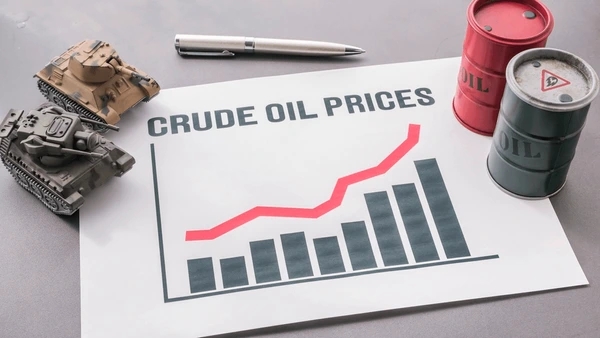
Oil is the lifeblood of modern economies, and for a fast-growing country like India, its importance cannot be overstated. As one of the largest importers of crude oil in the world, India is highly vulnerable to fluctuations in global oil prices. The oil price impact Indian economy is significant, influencing everything from inflation and GDP growth to fiscal balance and consumer spending.
In this blog, we will explore the crude oil prices' effects on India, understand how oil price fluctuations affect Indian GDP, and analyze the broader consequences of rising oil prices India's inflation.
India’s Dependence on Crude Oil
India imports nearly 85% of its crude oil requirements, making it extremely sensitive to global oil price movements. Since oil is a critical input for transportation, manufacturing, and energy production, any increase in crude oil prices directly impacts multiple sectors of the economy.
When global crude oil prices rise, India’s import bill increases, putting pressure on the country’s current account deficit (CAD) and weakening the rupee. Conversely, when oil prices fall, India benefits from reduced import costs and improved economic stability.
Crude Oil Prices in India and Their Effects on Inflation
One of the most immediate consequences of rising oil prices is inflation. Fuel prices affect the cost of transportation, which in turn increases the price of goods and services across the economy.
Key Inflationary Impacts:
-
Transportation Costs Rise: Higher fuel prices increase logistics costs, raising the prices of essential goods like food and vegetables.
-
Manufacturing Becomes Costlier: Industries dependent on oil and energy face higher production costs.
-
Household Expenses Increase: Consumers pay more for petrol, diesel, LPG, and daily necessities.
Thus, rising oil prices in India become a major concern for policymakers, as it reduces purchasing power and slows down consumption.
How Oil Price Fluctuations Affect Indian GDP
Oil prices play a crucial role in determining economic growth. Let’s break down how oil price fluctuations affect Indian GDP:
1. Impact on Consumption
When fuel prices rise, households spend more on essentials like petrol and cooking gas. This reduces disposable income, leading to lower spending on other goods and services—ultimately slowing down economic growth.
2. Impact on Industrial Production
Higher oil prices increase input costs for industries such as transportation, aviation, chemicals, and manufacturing. This can reduce profitability and lead to lower production output.
3. Government Spending and Fiscal Deficit
To control inflation, the government may reduce fuel taxes or increase subsidies. While this helps consumers, it increases the fiscal deficit, limiting government spending on infrastructure and development.
4. Exchange Rate Pressure
Higher oil import bills increase demand for foreign currency (mainly US dollars), weakening the Indian rupee. A weaker rupee makes imports more expensive, further affecting GDP growth.
Overall, sustained high oil prices can slow down GDP growth, while stable or lower prices can boost economic performance.
Impact on Current Account Deficit (CAD)
The oil price impact Indian economy is strongly linked to the current account deficit. Since oil imports form a major part of India’s total imports, rising oil prices widen the CAD.
A higher CAD can:
-
Reduce investor confidence
-
Put pressure on the rupee
-
Increase external borrowing
On the other hand, falling oil prices help reduce the deficit and improve economic stability.
Sector-Wise Impact of Rising Oil Prices
1. Transportation and Logistics
Fuel is a major cost component in this sector. Rising oil prices increase freight costs, affecting supply chains and raising the price of goods.
2. Aviation Industry
Airlines are heavily dependent on aviation turbine fuel (ATF). Higher oil prices significantly increase operational costs, often leading to higher ticket prices.
3. Agriculture Sector
Diesel is widely used for irrigation and farming equipment. Rising fuel prices increase the cost of agricultural production, which may lead to higher food prices.
4. FMCG and Retail
Companies face higher transportation and packaging costs, which are often passed on to consumers.
Government Measures to Control Oil Price Impact
The Indian government takes several steps to manage the crude oil prices India effects:
-
Excise Duty Adjustments: Reducing taxes on fuel to control retail prices
-
Subsidies: Providing relief on LPG and other essential fuels
-
Strategic Oil Reserves: Storing crude oil to manage supply disruptions
-
Diversification of Imports: Importing oil from multiple countries to reduce dependency
These measures aim to stabilize the economy and protect consumers from sharp price increases.
Long-Term Solutions for Reducing Oil Dependency
To minimize the oil price impact Indian economy, India is focusing on long-term strategies:
1. Renewable Energy Expansion
India is investing heavily in solar, wind, and hydro energy to reduce dependence on fossil fuels.
2. Electric Vehicles (EVs)
Promoting EV adoption can significantly reduce fuel consumption in the transportation sector.
3. Domestic Oil Production
Increasing domestic exploration and production can help reduce import dependency.
4. Energy Efficiency
Encouraging industries and households to use energy-efficient technologies can lower overall oil demand.
Relevance for Career-Oriented Courses
Understanding economic factors like oil price fluctuations is essential for students pursuing professional courses such as an Income Tax Course or a GST Course. These courses help individuals analyze how macroeconomic changes impact taxation, pricing, and business operations.
For example:
-
Rising fuel costs affect GST collections on goods and services
-
Inflation impacts tax planning and financial decision-making
-
Businesses need skilled professionals to manage cost fluctuations and compliance
Thus, knowledge of economic trends enhances career opportunities in accounting, taxation, and finance.
Conclusion
The oil price impact Indian economy is profound and far-reaching. From inflation and GDP growth to fiscal stability and sectoral performance, oil prices influence almost every aspect of the economy. Understanding crude oil prices India's effects, and how oil price fluctuations affect Indian GDP is crucial for policymakers, businesses, and individuals alike.
What's Your Reaction?