50 Important Cash Book Questions & Answers For Interview Preparation
This blog covers 50 important cash book interview questions and answers to help accounting students and job seekers prepare effectively. It explains key concepts such as types of cash books, contra entries, bank transactions, discounts, and reconciliation in a simple, interview-focused format. These questions strengthen practical knowledge and improve confidence for accounting job interviews. Beginners and freshers can use this guide to revise daily bookkeeping fundamentals and understand real-world accounting tasks. Enrolling in a professional Accounting Course, along with a Taxation Course and GST Course, can further enhance practical skills and make candidates job-ready for roles like accounts executive, junior accountant, or finance assistant.
If you’re preparing for an accounting job interview, the cash book is one of the most frequently asked topics. Recruiters want to check your understanding of basic accounting entries, day-to-day bookkeeping, and practical knowledge used in real businesses. Whether you are a fresher or an experienced candidate, revising cash book concepts can boost your confidence and help you crack interviews faster.
Many students who enroll in an Accounting Course often start their practical learning with the cash book because it is the foundation of accounting records.
This blog covers 50 important cash book interview questions and answers that can help you prepare effectively.
Basic Cash Book Questions
1. What is a cash book?
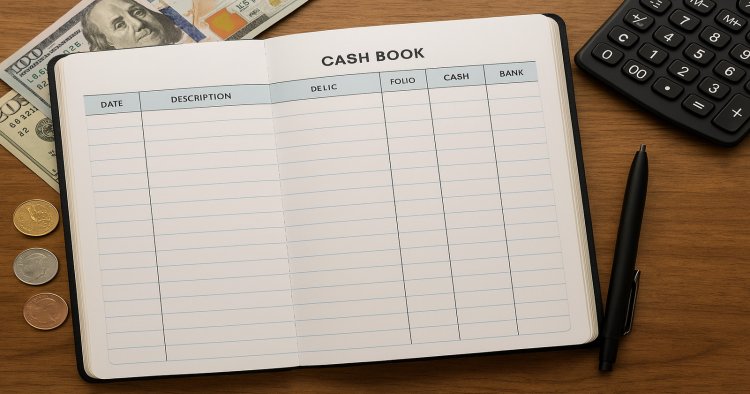
A cash book is a financial journal that records all cash and bank transactions of a business.
2. Is a cash book a journal or a ledger?
It serves as both a journal and a ledger.
3. Why is a cash book important?
It helps track cash inflow, outflow, and bank balances accurately.
4. What are the types of cash books?
Single column, double column, and triple column cash book.
5. What is a single-column cash book?
It records only cash transactions.
6. What is a double-column cash book?
It records cash and bank transactions.
7. What is a triple-column cash book?
It records cash, bank, and discount transactions.
8. Who maintains the cash book?
An accountant or accounts executive.
9. Where is the cash book balance shown in financial statements?
In the balance sheet under cash and bank.
10. Can a cash book have a credit balance?
Yes, in the bank column (overdraft situation).
Practical Cash Book Questions
11. How do you record cash received from a customer?
Debit the cash column and credit the customer’s account.
12. How do you record cash paid to a supplier?
Credit the cash column and debit the supplier’s account.
13. What is contra entry?
An entry involving both cash and bank columns in the cash book.
14. Give an example of contra entry.
Cash deposited into the bank.
15. How is a contra entry recorded?
Marked with “C” in both debit and credit columns.
16. What is petty cash?
Small expenses paid in cash for daily operations.
17. What is a petty cash book?
A record of minor cash expenses.
18. What is an imprest system?
A fixed amount given for petty expenses and replenished periodically.
19. How is cash withdrawn for office use recorded?
Debit cash and credit bank.
20. How is cash deposited into the bank recorded?
Debit bank and credit cash.
Bank Transactions & Adjustments
21. What is a bank column in a cash book?
It records all bank-related transactions.
22. How do you record bank charges?
Credit bank column.
23. How do you record interest received from bank?
Debit bank column.
24. What is a dishonoured cheque?
A cheque returned unpaid by the bank.
25. How is a dishonoured cheque recorded?
Reverse the original entry in the cash book.
26. What is a cheque issued but not presented?
A cheque issued but not yet cleared by the bank.
27. What is a cheque deposited but not cleared?
A cheque deposited but not yet credited by the bank.
28. What is bank reconciliation?
Matching cash book balance with bank statement.
29. Why do differences occur between cash book and bank statement?
Timing differences and bank charges.
30. How often should reconciliation be done?
Monthly.
Discount & Advanced Entries
31. What is discount allowed?
Discount given to customers.
32. What is discount received?
Discount received from suppliers.
33. Where is discount recorded in triple column cash book?
In the discount column.
34. Is discount a cash transaction?
No, but recorded alongside cash entries.
35. What is a two-column cash book?
Cash and discount columns.
36. How do you balance a cash book?
Total both sides and carry forward the balance.
37. Can cash column show negative balance?
No, cash cannot be negative.
38. Can bank column show negative balance?
Yes, in overdraft cases.
39. What is balancing carried down?
Closing balance of the period.
40. What is balancing brought down?
Opening balance for the next period.
Interview-Oriented Conceptual Questions
41. Difference between cash book and cash account?
Cash book is a book of original entry; cash account is in the ledger.
42. What is posting from cash book?
Entries are posted to ledger accounts except cash and bank.
43. What is a memorandum cash book?
An internal record for temporary use.
44. Why is cash book updated daily?
To maintain accurate cash balance.
45. What skills are required to maintain a cash book?
Accuracy, attention to detail, and basic accounting knowledge.
46. How does GST affect cash book entries?
GST components are recorded with sales and purchases.
47. What software is used for maintaining cash book?
Tally, Excel, and ERP systems.
48. Why do interviewers ask cash book questions?
To test practical accounting knowledge.
49. How can students practice cash book entries?
Through accounting assignments and practical training.
50. Which course helps you master cash book concepts?
A professional Accounting along with a Taxation Course and GST Course, helps build strong practical skills.
Final Thoughts
Cash book knowledge is essential for every accounting job role, from junior accountant to accounts executive. Interviewers often focus on basic accounting concepts because they reflect your practical understanding and readiness for real-world tasks. Practicing these 50 important cash book questions and answers will help you perform confidently in interviews and improve your bookkeeping skills.
What's Your Reaction?